

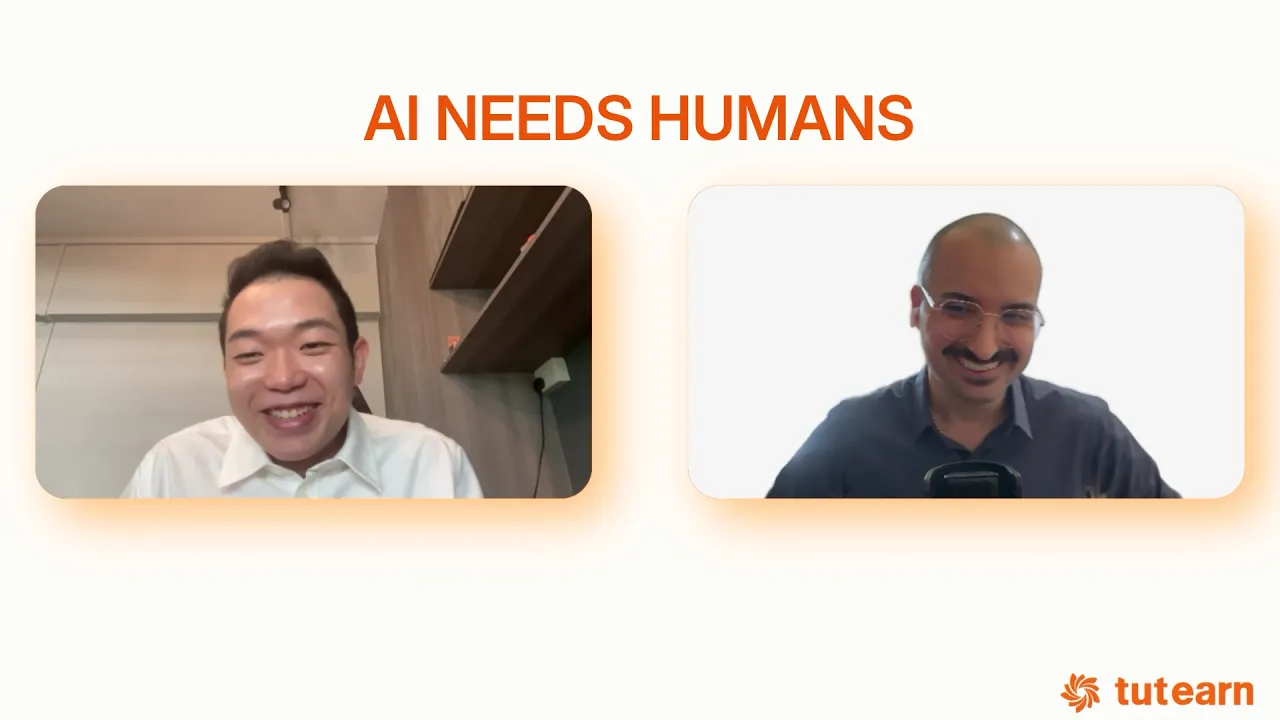
AI Automation and Educational Infrastructure in Singapore with Lowell

Lowell
Talent Pod Asia
Discover how to eliminate administrative gridlock and optimize tutoring operations by pairing agentic AI with offshore talent teams in Southeast Asia.
Key Insights from Lowell
The Evolution of Offshore Infrastructure and Agentic AI
Scaling a modern business in high-cost environments requires a structural shift from simple virtual assistance to automated, AI-augmented workflows. Many education operators view artificial intelligence as a basic prompting engine to handle ad-hoc questions. True operational leverage emerges when businesses deploy autonomous agentic AI to execute deep backend logic while maintaining offshore human talent for verification and quality control. This hybrid infrastructure protects data integrity and establishes long-term cost efficiency against surging local overheads.
Mitigating Administrative Gridlock in High-Volume Operations
Managing multiple physical classrooms, tracking dozens of teachers, and coordinating hundreds of weekend student class allocations creates a severe logistical bottleneck that manual spreadsheets cannot sustain. Operators must aggressively automate routine backend workflows to protect high-value teaching assets from operational burnout and administrative friction.
Automated CRM Dispatch: Deploy AI agents to ingest incoming leads, categorize intent, assign processing tiers, and execute instant email follow-ups automatically.
Worksheet Formatting and Admin Offloading: Leverage offshore technical talent paired with automated scripts to manage repetitive PDF parsing, document formatting, and administrative data entry.
Data Protection Strictures: Enforce strict data isolation policies by explicitly banning the upload of unencrypted customer records into public LLM platforms to avoid compliance liabilities.
Curriculum Integrity Versus Automated Shortcuts
High-volume tuition centers face deep structural friction when trying to integrate automated tools into student workflows and content development. While machine systems successfully optimize calendar distribution and lead pipelines, using them to generate core academic question pools degrades curriculum quality and introduces severe accuracy risks. On the consumer side, the current educational incentive structure rewards final correct answers, which encourages students to treat public language models as simple copying mechanisms. To scale a center sustainably, operators must keep critical content development under strict human oversight while restructuring classroom incentives around critical thinking and tactile, hands-on applications that software cannot replicate.
Preserving the Human Element in a Token-Driven Economy
The shift toward a token-based computational economy means that business velocity will depend heavily on software leverage, yet raw algorithmic outputs will never substitute for true human presence. Long-term brand defensibility relies on pairing technical efficiency with authentic storytelling and real-world physical experiences.
"We are limited by our learnings and how much we know about it, but please do not let automation take away the specific skills that make you human."
Connect Section
Websites: Talent Pod Asia | Heuristics Science
LinkedIn: Lowell Lek on LinkedIn
Timestamps
00:00 - Introduction to the Learning Curve and Guest Lowell
00:23 - Overview of Talent Pod Asia as an AI Consultancy and Talent Solution
02:22 - The Genesis of Talent Pod Asia and Rising Labor Costs in Singapore
04:02 - Combining Human Talent with AI Infrastructure
06:26 - The Landscape of AI Adoption in Singaporean Enterprises
07:18 - Moving Beyond Prompting to Agentic AI Systems
09:10 - Use Case: Building an Automated CRM System in 48 Hours
11:13 - Critical Red Flags: Preventing Customer Data Leaks on Public LLMs
12:48 - The Token Economy and Calculating the True ROI of Digital Systems
15:54 - Practical Applications of AI in Large-Scale Education Settings
17:10 - Why Core Curriculum Generation Requires Strict Human Oversight
19:06 - Navigating AI Policies Across Management, Teachers, and Parents
22:19 - Curbing Student Reliance on AI as a Copying Mechanism
24:00 - The Heuristics Science Model: Structural Incentives for Critical Thinking
27:26 - Where to Connect with Lowell Online




"We used to spend 10–15 hours weekly on manual scheduling and payroll corrections. Now everything runs in one system — scheduling, payroll, and business report. Tutearn reduced admin work by over 60% even though we doubled our student base."
Zwe
CEO
Pace Forward Thailand