

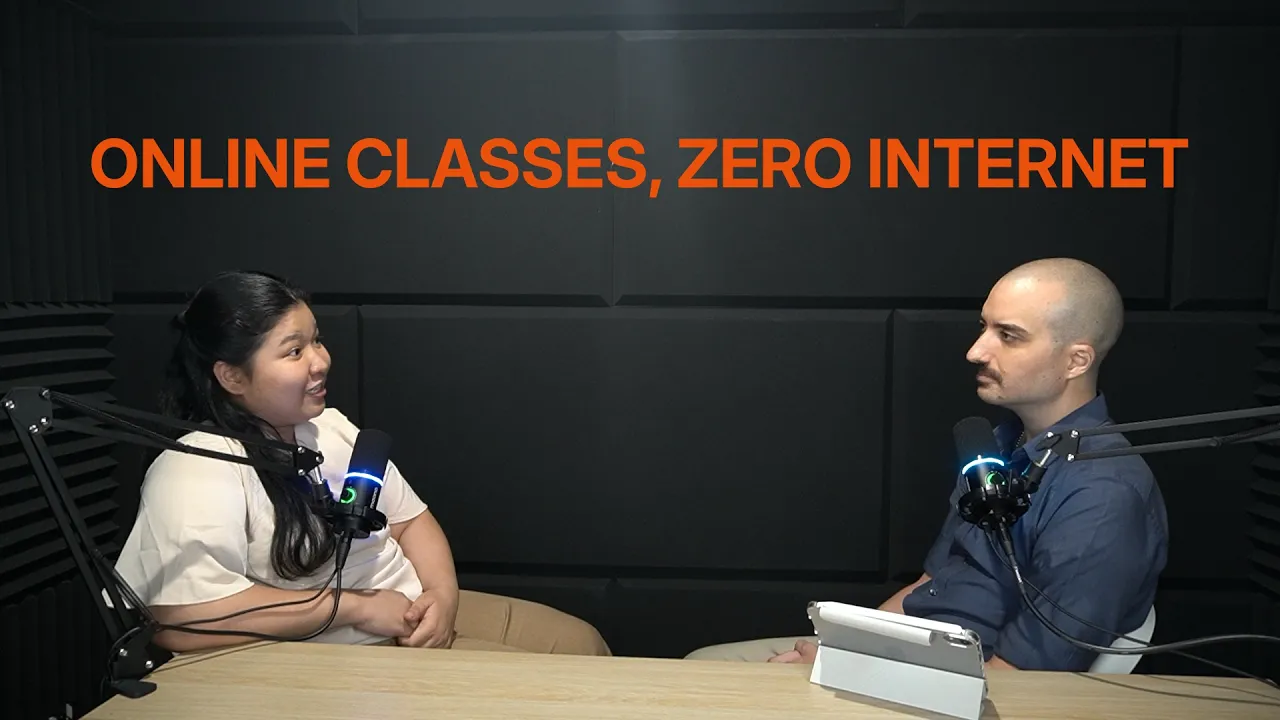
Scaling Online Language Services in Myanmar with Khine

Khine Susu Thinn
Nolen Private Online Japanese Language Classes
Learn how Khine Susu Thinn scaled Nolen to 1,000 students. Discover strategies for managing online education and systems in volatile infrastructure markets.
Key Insights from Khine Susu Thinn
Navigating Infrastructure Volatility
Khine discusses the immense operational resilience required to run a high-volume language center in a market with frequent power blackouts and internet instability. She explains why Nolen utilizes physical office spaces as "stable digital hubs" for teachers rather than relying solely on residential connections. By providing a centralized location with backup power and professional-grade internet, the business ensures that the student experience remains consistent even when the local infrastructure fails.
The Strategic Pivot: The 1-on-1 Online Edge
While most language schools in the region attempt to scale through large physical classrooms, Khine identifies why a move toward a 100% online, one-on-one model creates a competitive moat that traditional centers cannot easily replicate:
Deep Market Penetration: Focusing on private sessions allows Nolen to serve niche segments, such as Burmese expats living in Japan who require specific, high-intensity training.
Operational Flexibility: The online model removes the overhead of multi-city campuses, allowing for a "buffer" in scheduling that compensates for unpredictable connectivity issues.
Active Learning ROI: One-on-one sessions ensure that students are constantly engaged, leading to higher pass rates in standardized Japanese proficiency tests compared to passive group environments.
Breaking the Spreadsheet Ceiling
A critical part of the interview covers the "No-System" bottleneck. Khine candidly shares the administrative burnout that occurred once Nolen exceeded 1,000 active students using only manual data entry. Managing 70 teachers across different time zones using complex Google Sheet formulas led to significant revenue leaks and payroll discrepancies. Transitioning to an automated management system reclaimed 50% of her operational time, shifting her focus from administrative oversight to strategic expansion.
Developing a Teacher-Leadership Pipeline
Khine argues that sustainable growth for an education founder depends on the evolution of their role from a task-oriented micromanager to a mentor of talent. She is currently training her top freelance teachers to handle business operations, effectively decentralizing authority.
"To reach the next level, I had to stop checking every screenshot and every class record myself. I had to build a network of leaders who care about the quality of the teaching as much as I do."
Connect with Khine and Nolen
If you are an educator or center owner looking to understand the mechanics of language school operations in emerging markets:
Professional Profile: Khine Susu Thinn on LinkedIn
Episode Highlights
01:00:52 – Introduction to Khine Susu Thinn and the founding of Nolen.
01:03:04 – Operating an education business during economic and social crisis in Myanmar.
01:06:08 – Moving from hybrid models to a 100% online one-on-one strategy.
01:07:19 – Solving the infrastructure challenge: Managing blackouts and VPN connectivity.
01:10:45 – Recruitment and quality control standards for 70+ remote teachers.
01:14:17 – Identifying the "No-System" bottleneck and the cost of manual effort.
01:18:25 – The transition from fragile spreadsheets to automated scheduling and payroll.
01:21:12 – Future vision: Shifting from founder-led management to a teacher-leadership network.
01:26:38 – Education Trends: AI’s role in language learning and the shift to active learning.






"We used to spend 10–15 hours weekly on manual scheduling and payroll corrections. Now everything runs in one system — scheduling, payroll, and business report. Tutearn reduced admin work by over 60% even though we doubled our student base."
Zwe
CEO
Pace Forward Thailand